
In October 2019, Google rolled out an update it called the biggest leap forward in search in five years. It was named BERT, and at the time most of us treated it as just another algorithm update to worry about. With the benefit of hindsight from 2026 — an era of AI Overviews and Gemini-powered search — BERT looks like something much bigger: the moment Google started reading like a human. Everything that’s happened to search since traces back to it. Here’s the full story — what BERT was, what it changed, and the direct line from BERT to the AI search results we see today.
In this guide
What was the Google BERT update?
BERT stands for Bidirectional Encoder Representations from Transformers. It started life as a research breakthrough: Google’s AI team published the BERT paper (Devlin et al.) in October 2018 and open-sourced the model, where it quickly set new records across natural language understanding benchmarks.
A year later, Google brought BERT into Search. In the official announcement, Google’s Pandu Nayak said BERT would initially affect about 1 in 10 English searches in the US, and called it “the biggest leap forward in the past five years, and one of the biggest leaps forward in the history of Search.”
The key word in the acronym is bidirectional. Older models processed text one word at a time, left to right. BERT looks at every word in a sentence in relation to all the other words around it — before and after — at once. That lets it grasp how small words change meaning entirely. Google’s famous example: for the query “2019 brazil traveler to usa need a visa,” older systems ignored the word “to” and returned results about US citizens traveling to Brazil. BERT understood the direction of travel mattered and surfaced the right answer.
What BERT actually changed for searchers and sites
BERT’s impact showed up in a few specific places:
- Long, conversational queries. BERT shone on natural-language searches where prepositions like “for” and “to” carry the meaning — exactly the kind of queries people type (and speak) when they search the way they talk.
- Featured snippets. At launch, BERT also improved featured snippets in over two dozen countries and languages — queries like “parking on a hill with no curb” stopped returning answers that overweighted the word “curb” and ignored the “no.”
- Nothing to “optimize for.” Google was unusually blunt about this: there was no BERT checklist. The only advice was to write clearly for humans. Sites that lost visibility hadn’t been penalized — their pages simply stopped ranking for queries they never truly answered.
That last point was the philosophical shift. For years, SEO had involved guessing how a machine would parse keywords. BERT flipped the burden: the machine would now do the work of understanding people, and content had to actually satisfy intent.
RankBrain vs. BERT: clearing up an old confusion
BERT didn’t replace RankBrain, and the two are often mixed up. Google’s own 2022 explainer on AI in Search lays out the timeline: RankBrain (2015) was Google’s first deep-learning ranking system, helping relate words to broader concepts. Neural matching (2018) added fuzzier concept-to-query matching. BERT (2019) added true understanding of how word combinations express meaning and intent. All of these systems still run together — and by early 2022, Google confirmed BERT was used on almost every English query, a long way from the original 1 in 10.
The lineage: from BERT to MUM to helpful content
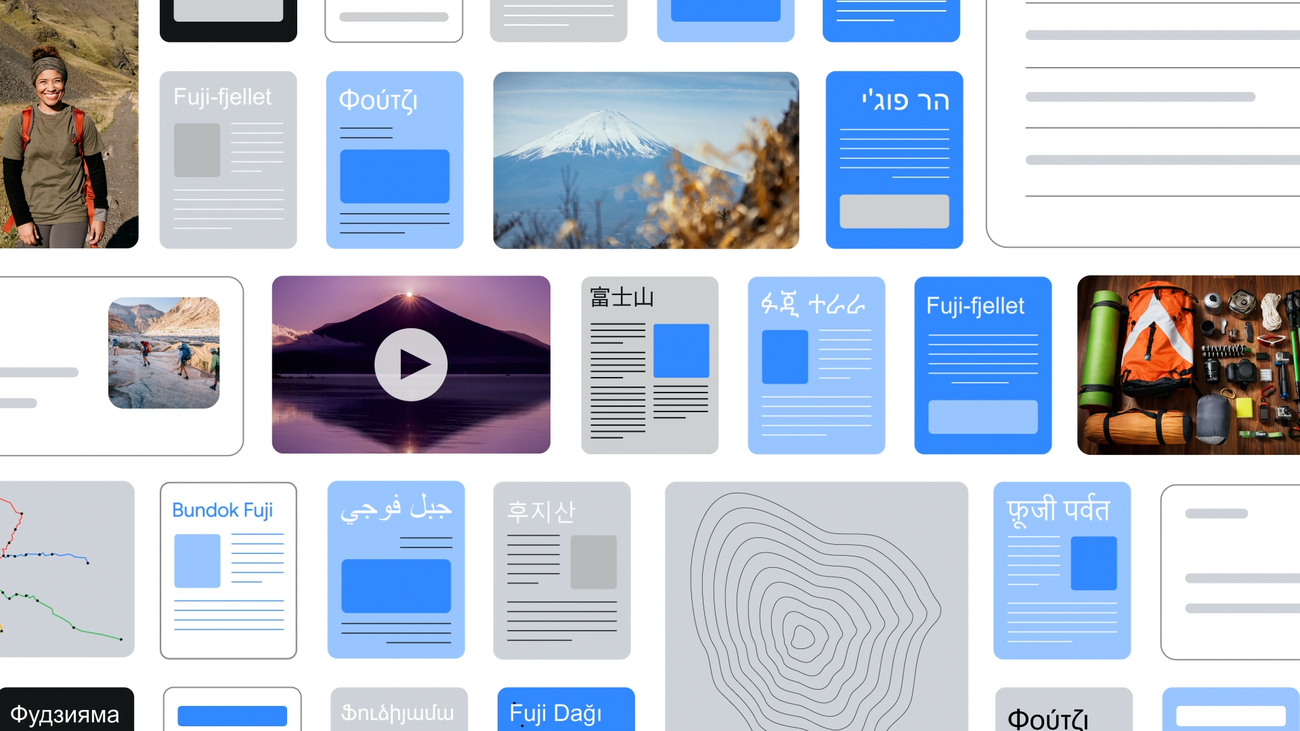
Once Google had a model that could genuinely read, the roadmap became obvious: read more, understand more, answer more.
- MUM (May 2021). Google announced the Multitask Unified Model, which it described as 1,000 times more powerful than BERT — trained across 75 languages and able to understand text and images together. MUM was aimed at complex, multi-step questions, though Google noted it wasn’t used for core ranking the way BERT was.
- The helpful content system (August 2022). With machines now able to judge whether content actually answers a question, Google shipped the helpful content update — a sitewide signal rewarding “people-first” content and demoting pages written for search engines rather than humans. It’s the policy expression of what BERT made technically possible.
- AI Overviews (May 2024). The endpoint of the lineage: Google put a Gemini model directly into the results page. As announced at Google I/O 2024, AI Overviews rolled out to all US users, generating answers — with cited sources — above the traditional results. The transformer architecture behind Gemini is the same family of technology BERT introduced to Search five years earlier.
Seen this way, BERT wasn’t an update. It was a direction. Every step since has been Google’s language models moving from understanding queries to understanding content to writing the answer themselves.
What BERT means for SEO in 2026
Our original 2019 advice — “you can’t optimize for BERT, just write naturally for humans” — turned out to be the most durable SEO advice of the decade. In 2026, with AI-generated answers sitting on top of the SERP, the same principles apply with higher stakes:
- Write for intent, not keywords. Google reads whole passages now. Content that genuinely answers the underlying question wins; keyword-stuffed content doesn’t just underperform — it gets filtered out.
- Be quotable. Clear, well-structured, factually precise passages are what AI Overviews and chatbots cite. Ambiguity costs you the citation.
- Demonstrate real expertise. When language models can generate infinite generic text, first-hand experience and original information are the only defensible moat — exactly what the helpful content system rewards.
- Cover topics, not query strings. Since BERT (and especially since MUM), Google connects related questions across a topic. Thin pages targeting single phrases lost to comprehensive resources long ago.
Wrapping up
BERT was the hinge point of modern search: the update where Google stopped matching strings and started reading meaning. Everything since — MUM, helpful content, AI Overviews — is that idea scaled up. The lesson it taught in 2019 is still the winning strategy in 2026: understand what people are actually asking, and answer it better than anyone else. If you want to put that into practice, the place to start is understanding real search intent — our guide to the best keyword research resources shows you how to do exactly that in the AI search era.
Great summary ! & I agree that SEOs are opportunistically hyping things up.
Pingback: The SEO Newsletter: Volume 1 – DigiTortoise
Pingback: The SEO Newsletter: Volume 1 - Tech Blog